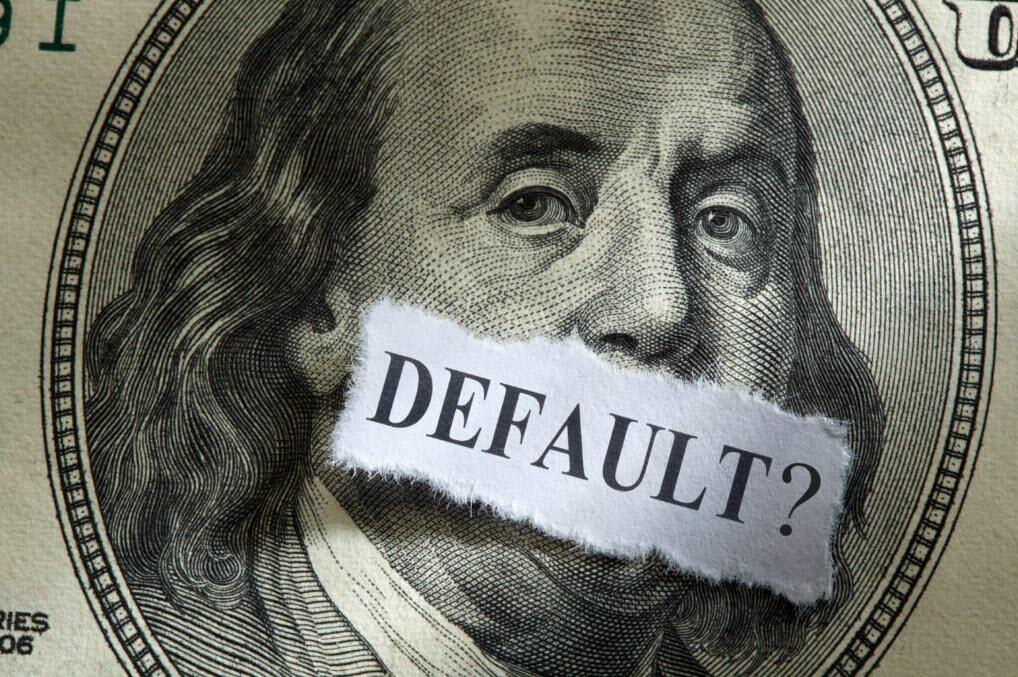
U.S. government default is not a question of if, it’s a question of how—outright default or default by debasement? From James Turk at zerohedge.com:
“How did you go bankrupt?” Bill asked. “Two ways,” Mike said.
“Gradually and then suddenly.”
Ernest Hemingway, The Sun Also Rises, 1926
The financial position of the federal government of the United States has been gradually deteriorating for decades.
It is now rushing headlong to the financial tipping point that will cause it to default on its promises yet again.
What kind of default will it be this time?

Previous U.S. Government Defaults
Will it be like the 1933 default when the federal government reneged on its debt and stopped the deflationary spiral in the dollar caused by the unwinding of the 1920’s credit bubble instigated by banks? Or will the federal government repay its debt by pretending to fulfil its promises with a worthless currency, repeating what occurred in the 1780s with the country’s first currency, the continental?
In my books and articles over the years I have been making the case that it will be the latter. The dollar has been on a path leading to its collapse. It is the path of least resistance for politicians and their captive central bankers to take, as evidenced by the dozens of currencies that have failed just in living memory, let alone those from monetary history buried in the fiat currency graveyard and long forgotten.
The erosion of the dollar’s purchasing power so far has been gradual, but it is accelerating. Nevertheless, there is still time for political leaders to act.
The right thing to do is simply walk away from the debt and start over. That is what the framers of the Constitution did. So starting over this time would not be starting from scratch. We do not need to relearn from experience what Americans endured from the collapse of the continental two and one-half centuries ago. We can act now before the decline in the dollar’s purchasing power accelerates by simply returning to the constitutional monetary system that existed from the Mint Act of 1792 until 1913 when the Federal Reserve was created.