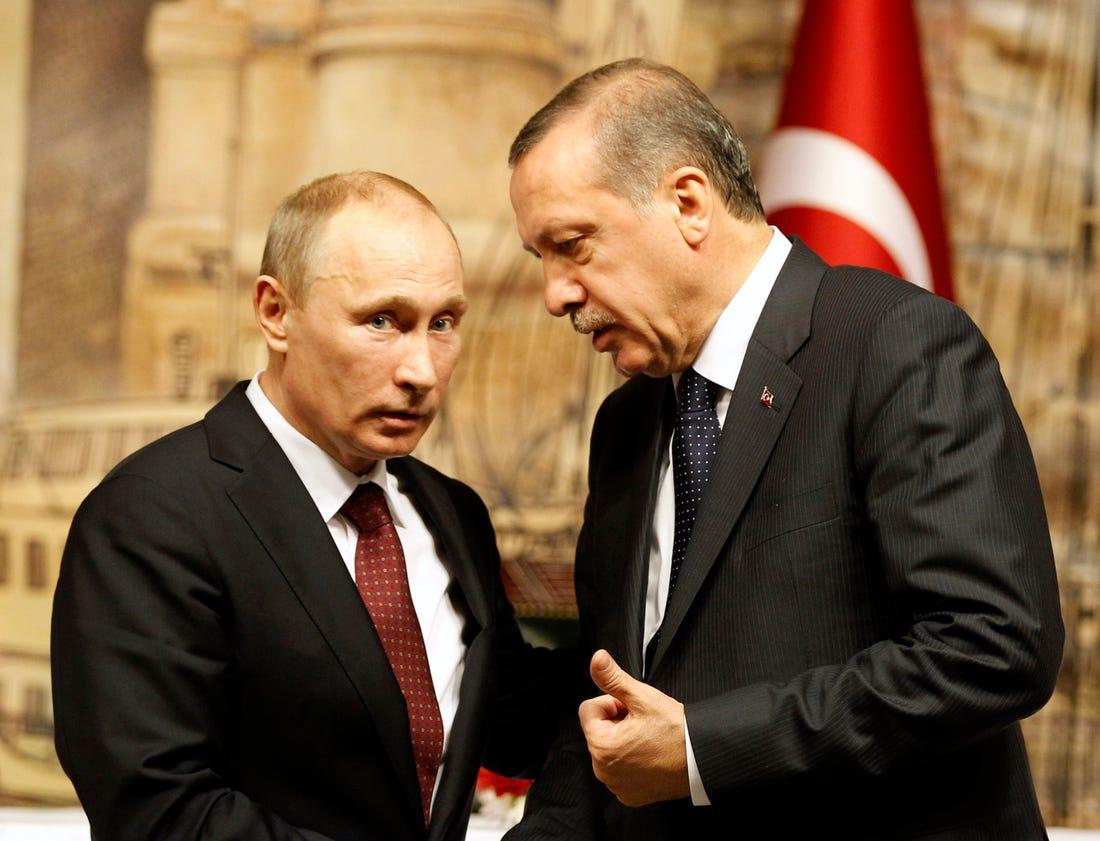
The Kurds have little choice but to deal with the Syrian government and support Russian mediation in northern Syria. From Pepe Escobar at asiatimes.com:
Posted in Energy, Eurasian Axis, Foreign Policy, Geopolitics, Governments, Military, Politics, War
Tagged Bashar al-Assad, Kurds, Oil, President Trump, Russia, Syria, Turkey
Let’s hope the interventionist era is drawing to a close. From Patrick J. Buchanan at buchanan.org:
President Donald Trump could have been more deft and diplomatic in how he engineered that immediate pullout from northeastern Syria.
Yet that withdrawal was as inevitable as were its consequences.
A thousand U.S. troops and their Kurdish allies were not going to dominate indefinitely the entire northeast quadrant of a country the size of Syria against the will of the Damascus regime and army.
Had the U.S. refused to vacate Syrian lands on Turkey’s demand, a fight would be inevitable, whether with Turkey, Damascus or both. And this nation would neither support nor sustain a new war with Turks or Syrians.
And whenever the Americans did leave, the Kurds, facing a far more powerful Turkey, were going to have to negotiate the best deal they could with Syria’s Bashar Assad.
Nor was President Recep Erdogan of Turkey going to allow Syrian Kurds to roost indefinitely just across his southern border, cheek by jowl with the Turkish Kurds of the PKK that Erdogan regards as a terrorist threat to the unity and survival of his country.
Posted in Foreign Policy, Geopolitics, Governments, History, Politics
Here is a view of the Turkey-Syria-Kurd situation 180 degrees opposite Ron Paul’s:
An article from long term Automatic Earth contributor Alexander Aston, who feels very strongly about the topic.
Personally, I have many more questions left. It’s easy to say Trump abandoned the Kurds, and everybody says just that, but because they all do I ask myself if that is really what happened. It’s an ugly situation alright, but would it have been prefereable if US soldiers had stayed in Syria indefinitely?
I’m looking at France, UK, Germany, Holland, refusing to repatriate ‘their’ ISIS citizens, leaving the US -and the Kurds- to take care of them, of the conundrum, and of the consequences. There’s no question that leaving it up to Erdogan is a bad idea, but Putin has already taken over command.
Everyone but Capitol Hill agrees it’s a good idea to get the US out of Endless Wars, but they haven’t been doing anything about it for many years. And when Trump does, there are no intricate discussions, there’s only black or white and then there’s Orange Man Bad.
Should Trump have gone the Obama route and bombed the heebeejeebees out of the country? you know, rather than let Turkey do it, knowing full well that Putin would stop it anyway?
But this is Alexander’s piece, not mine, and I love him.
Alexander Aston:
“If we do not do the impossible, we shall be faced with the unthinkable.”
– Murray Bookchin
Like the best of his generation, my American grandfather was a die-hard antifascist. He was shot down twice over Europe and spent the last nine months as a prisoner of war. The old man was highly decorated, earning a distinguished flying cross with three oak leaf clusters, four air medals, a silver star and a purple heart. However, the only memento of the war he ever showed me as a child was the tin mug that he ate from while in prison camp.
Posted in Foreign Policy, Geopolitics, Governments, History, Military, Morality, Politics, War
Tagged Kurds, Middle East, Syria, Turkey
The Kurd “slaughter” everyone has warned of probably won’t happen as the Kurds throw in their lot with the Syrian government. From Ron Paul at ronpaulinstitute.org:
When President Trump Tweeted last week that “it is time for us to get out of these ridiculous endless wars,” adding that the US would be withdrawing from Syria, Washington went into a panic. Suddenly Republicans, Democrats, the media, the think tanks, and the war industry all discovered and quickly became experts on “the Kurds,” who we were told were an “ally” being sent to their slaughter by an ignorant President Trump.
But it was all just another bipartisan ploy to keep the “forever war” gravy train rolling through the Beltway.
Interventionists will do anything to prevent US troops from ever coming home, and their favorite tactic is promoting “mission creep.” As President Trump Tweeted, we were told in 2014 by President Obama that the US military would go into Syria for just 30 days to save the Yazidi minority that they claimed were threatened. Then that mission crept into “we must fight ISIS” and so the US military continued to illegally occupy and bomb Syria for five more years.
Posted in Foreign Policy, Geopolitics, Governments, History, Media, Military, War
Tagged Kurds, President Trump, Syria, Turkey
Vladimir Putin is calling the tune in Syria. From Tyler Durden at zerohedge.com:
“Putin is capitalizing on the chaotic retreat of the US and Turkey’s brutality toward the Kurds in order to assert Russia’s leadership,” Syria analyst Joshua Landis observed of a newly published Vladimir Putin interview. “He contrasts how Russia has stood beside its beleaguered ally, Syria, while the US has abandoned both its allies, the Kurds and the Turks,” Landis added.
Putin said in the interview: “Syria must be free from other states’ military presence. And the territorial integrity of the Syrian Arab Republic must be completely restored.”
Given this weekend’s rapidly unfolding events, with state actors Turkey and the Syrian Army squaring up on front lines, Russia’s role in all this is probably still the greatest unknown, but what do we know at this point?

Precisely one week since Trump first unveiled a US troop exit from northeast Syria while essentially giving a green light to invading Turkish forces, events are unfolding at blistering speed, possibly toward a major Syrian Army clash with pro-Turkish forces, and no doubt toward a complete and final American withdrawal from Syria altogether.
Posted in Foreign Policy, Geopolitics, Governments, History, Military, War
Tagged President Trump, Russia, Syria, Syria withdrawal, Turkey
Will Trump finally get the US out of Syria? From Eric Margolis at lewrockwell.com:
More war in wretched Syria. Half the population are now refugees; entire cities lie shattered by bombing; bands of crazed gunmen run rampant; US, French, Israeli and Russian warplanes bomb widely.
Now, adding to the chaos, President Donald Trump has finally given Turkey, NATO’s second military power, the green light to invade parts of northeastern Syria after he apparently ordered a token force of US troops there to withdraw.
This, of course, puts the Turks in a growing confrontation with the region’s Kurds, who have occupied large swaths of the area during Syria’s civil war. The Kurdish militia, known as YPG (confusingly part of the so-called Free Syrian Army), is armed, lavishly financed and directed by the CIA and Pentagon.
Posted in Foreign Policy, Geopolitics, Governments, History, Imperialism, Military, War
Tagged Kurds, President Trump, Russia, Syria, Turkey
President Trump may have finally done something right in the Middle East. From David Stockman at antiwar.com:
Just when you think the Donald has lost his marbles completely, he pulls a rabbit of rationality out of the hat of Imperial Washington’s Forever Wars madness.
We are referring, of course, to his sensible decision to decline the opportunity to put American soldiers in harms’ way in an impending showdown between Turks and Kurds on the northern border of Syria. To our recollection, that particular tribal enmity has been going on for centuries and needs no help from Washington to fester on for years to come.
But already he is being monkey-hammered by the bipartisan War Party because by standing down and removing US forces from the contested towns along the border Trump is basically sounding the death knell for the neocons’ failed, bloody, illegal and demented regime change project in Syria.
Now – and very soon – the Kurds will have to make a deal with Assad and his Russian and Iranian allies to counter Turkey’s incursion, including the creation of a “safe zone” along the Turkish border that would be off-limits to armed Kurdish forces.
Posted in Foreign Policy, Geopolitics, Government, Media, Military, Politics
Tagged Iran, Kurds, President Trump, Russia, Syrian withdrawal, Turkey
Russia may be far more instrumental to a Middle East peace than the US has been. From Tyler Durden at zerohedge.com:
Lebanese Arabic news broadcaster Al-Mayadeen is reporting that Russia has begun organizing “reconciliation talks” between Syria and Turkey, in what would be an unprecedented development, given President Erdogan’s position has long been that Turkey won’t negotiate with Damascus so long as Assad is in power.
The Middle East broadcaster cited Russian Foreign Minister Sergey Lavrov, who said, “Moscow will ask for start of talks between Damascus and Ankara”.
Russia’s TASS has also confirmed the initiative, making it the first significant attempt to bring the two sides to the table, given Ankara severed diplomatic ties with Damascus in 2012. Turkey could indeed be ready given it has finally gotten its way in Syria — with a long planned attack on Syrian Kurds along the border in northern Syria, which began Wednesday with an air and ground offensive.
Posted in Foreign Policy, Geopolitics, Governments, History, War
Tagged Middle East peace, Russia, Syria, Turkey
So far, Crown Prince of Saudi Arabia Muhammad bin Salman’s tenure has been distinguished only by his ineptitude. From As`ad AbuKhalil at consortiumnews.com:
From launching a war on Yemen to having Jamal Khashoggi murdered, As’ad AbuKhalil sizes up the magnitude of MbS’s miscalculations.
All is not well with the Saudi regime. Despite amassing more power than any previous Saudi ruler, with the possible exception of founding King `Abdul-`Aziz (known in the U.S. as Ibn Saud), Crown Prince Muhammad bin Salman, or MbS, has not been able to deliver on any of his political and economic promises.
MbS offered the Saudi people a bargain: that he would achieve military, political and economic successes while imposing brutal repression at home.
He also offered a modicum of social relaxation, probably at the behest of Western PR firms that have influence with Gulf regimes. But these social reforms have been neither consistent nor smooth. Women were permitted to drive but the feminist men and women who advocated rights for women were jailed and tortured. (The easing of social restrictions was presumably meant to be popular, but it’s hazardous to measure public opinion in Saudi Arabia: Western media’s “conversations-on-the-street” don’t really say much because this is a government that imposes long prison sentences for the wrong retweet.)

Saudi Crown Prince Muhammad bin Salman in 2018. (YouTube)
Power Grabber
MbS began seizing power when his ailing father took over as king in 2015. He then became minister of defense. The post had long been held by his uncle, Prince Sultan, and it was widely expected that Sultan would be succeeded by his son, Khalid Bin Sultan (the figure-head deputy commander of the Desert Storm war). But MbS disregarded customary succession and the balance of power among the various royal factions, including his better-educated and more-experienced half-brothers.
In 2017, when he promoted himself to crown prince from deputy crown prince, he became the sole undisputed leader of Saudi Arabia. To consolidate his economic and military control, he weakened the National Guard, the vehicle for tribal alliances in the kingdom.
As soon as MbS became defense minister, he launched the war on Yemen. He calculated that the war would only last a few weeks and that the Huthis would quickly surrender. (The Obama administration presumably found this credible, since it lent support to the adventure, probably as a compensation for the U.S.-Iran agreement, which the Saudis vigorously opposed.)
Epic Huthi Resistance
But the war has dragged on and the Huthis have proven a formidable military force. Their resistance to the brutal military campaign by Gulf and Western countries is nothing short of epic. And, while the war was launched in the name of weakening Iranian hold in the region, it has actually cemented ties between the Huthis and the Iranian regime and its allies in the region.
This calculation backfired on other fronts as well. The assault on Yemen brought international media scrutiny to his atrocious war crimes there, while repressions inside the kingdom have been exposed in the wake of the horrific killing and dismemberment of Jamal Khashoggi.
President Donald Trump with MbS in March 2017. (White House/Shealah Craighead)
MbS assumed that his excellent relations with the Trump administration, and with the other Western governments, would be sufficient to shield his regime from criticism. But Turkey — which has its own feud with the Saudis, largely due to Ankara’s alliance with Qatar and the Muslim Brotherhood, and its good relations with Iran — released embarrassing details about the complicity of the MbS government in the murder of Khashoggi in the consulate in Istanbul. Turkey left no doubt that MbS was the mastermind of the murder, and the CIA seems to agree, according to U.S. media.
Khashoggi’s slaying became a permanent stigma for MbS. With the exception of his brief appearance at the G-7 summit in France a few weeks ago, he has not visited the U.S. or the West since.
Confronting Iran
MbS’s miscalculations have extended to his entire confrontation with Iran in the region. Last year he kidnapped the prime minister of Lebanon, Saad Hariri (who has been a loyal Saudi client) to punish him for not going far enough in confronting Hizbullah. After subjecting him to beatings and humiliation, he forced him to read on a Saudi TV station a resignation letter prepared for him. But as soon as Hariri was released due to Western pressures, he returned to Lebanon and rescinded his resignation.
Furthermore, MbS was hoping — along with MbZ of the United Arab Emirates [Mohammed bin Zayed, crown prince of Abu Dhabi] — that Donald Trump would be the U.S. president they had been waiting for: the one who would launch a devastating war on Iran to end Teheran’s influence in the Middle East once and for all.
In the first few years of the Trump administration Saudi regime media were full of scathing attacks on former President Barack Obama, going so far as to suggest that he was a secret Shiite Muslim who harbored religio-political sympathy for Iran. That same press was filled with glowing profiles of Trump and praise for his impending military campaign against Iran. (This was during Trump’s famous twitter threats against Iran and North Korea.) But Trump has proven more cautious about military adventures than either of his immediate predecessors. Once the Saudi regime media picked up on those signals, criticism of the Trump administration surfaced.
Change of Mind
MbS seems to have now changed his mind about the desirability of war with Iran. What Iran has done in recent months (assuming it was responsible for the various attacks on shipping in the Gulf and on the oil installations in Saudi Arabia), is to demonstrate to Saudi Arabia and the UAE not only the reach of its bombing capability, but its determination to extend the war to the Arab Gulf countries if Iran is attacked by Israel or the U.S. This can explain the recent Saudi and Emirati overtures to the Iranian regime. Both are suddenly expressing concern over the cost of war, if it were to erupt in their region.
Istanbul protesters outside Consulate General of Saudi Arabia following the murder of Khashoggi. (Hilmi Hacaloglu, VOA via Wikimedia Commons)
MbS must not be a happy man. He wanted the war on Yemen to become his signature victory and cement his reputation domestically and regionally. But it has served the opposite purpose.
His 2017 blockade of Qatar has not gone well either. Qatar managed to survive economically and its impending regional isolation did not materialize either, as it worked to improve its relations with the unlikely odd mix of Turkey, Iran and the U.S.
Finally, MbS hoped Israeli Prime Minister Benjamin Netanyahu would be able to elevate his stature in Washington. But the latter has proven unable or unwilling to intervene on Capitol Hill to lower the tone of criticism aimed at MbS. Furthermore, Netanyahu is today the least popular Israeli prime minster in Congress, perhaps since 1948, because he has associated his fortunes so closely with the Republican Party, and with a president detested by Democrats. Netanyahu has been dealing with his own personal scandal, and the recent election didn’t guarantee him his premiership. In other words, MbS can’t count on Netanyahu.
Limited Choices
Bin Salman’s economic promises have also failed to bear fruit for the Saudi population. He may now be facing rising resentment within the royal family itself, although he’s so far managed to deal with that ruthlessly in the last two years.
MbS has limited choices. He can’t afford to antagonize Trump and nor can he influence Trump one way or another regarding U.S. policies toward Iran.
His best hope is that war does not take place, and that Khashoggi will be forgotten. That is very unlikely given the recent publicity surrounding the first anniversary of the killing. A man who made arrogance a key part of his personality, has been humiliated by Khashoggi, a former member of the Saudi royal entourage.
But then again, Western governments have short memories when it comes to war crimes, assassinations and human rights violations by despots who are loyal to Western agendas. Any rehabilitation that MbS can work out will require him to sacrifice much of his original agenda. It will mean curtailing his appetite for war in Yemen and elsewhere and to drop his plans to confront Iran on all fronts. The recent crippling of oil installations responsible for more than 50 percent of Saudi oil production had the effect of also crippling the foreign policy agenda of Mohammed bin Salman.
Posted in Crime, Foreign Policy, Geopolitics, Governments, Military, War
Tagged Houthis, Iran, Israel, Mohammad bin Salman, President Trump, Saudi Arabia, Turkey, Yemen
Did President Trump just change foreign policy in place since WWII? From Tom Luongo at tomluongo.me:
Over the weekend I asked whether Donald Trump had risen to the level of Grey Champion. A few days later Trump takes to Twitter and puts a big line item in his resume.
There have been signs of change coming since Trump rightly refused to go to war with Iran over their shooting down an unmanned U.S. drone.
Starting with a major shake up of his cabinet by firing National Security Director John Bolton to his tepid response to the Houthi attack on the Saudi Aramco Abqaiq facility, Trump has sought to defuse a situation that had flown way to close to the sun and threatened to burn millions.
These five tweets taken in context of the past few days, however, blow the lid off a number of narratives as well as ongoing operations.
Posted in Foreign Policy, Geopolitics, Government, Governments, Military, Politics, War
Tagged Impeachment, Iran, Israel, Middle East, President Trump, Russia, Saudi Arabia, Syria, Turkey