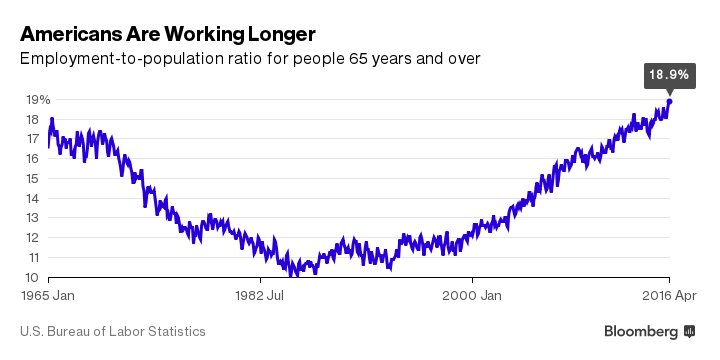
On a per capita basis, the job market has shown little improvement since the last financial crisis. From Wolf Richter at wolfstreet.com:
For individuals, it has barely improved since the Great Recession.
If you have a salary well into the six figures, stock options, nearly free healthcare, and other benefits such as access to free gourmet lunches and dinners at the company’s food court, you might have missed something that a lot of folks feel every day: It’s still a very tough battle out there in this job market. And here is why.
Today we got what was called a “stellar jobs report”: Non-farm payrolls rose 255,000 in July. In the other component of the report, the household survey showed that 420,000 new jobs were created. There are now a record 123.9 million full-time jobs. Government hiring was strong. Numerous sectors added to payrolls. And the unemployment rate remained stuck at 4.9%, with 7.8 million people deemed officially unemployed.
So everyone was happy. Well, certainly the stock market was. The S&P 500 closed at a new high. The Treasury market started worrying about a Fed rate hike, and the 10-year yield rose to 1.59%
But on an individual basis, on a per-capita basis – and this is what people feel when they’re looking for a job or asking for a raise – these “stellar” figures depict a job market that is only a little better than at the worst moment of the Great Recession.
On its population clock, the Census Bureau estimates that the US population on August 5, 2016, at 4:49 p.m. ET (yup, down to the minute) was 324.17 million.
That’s up from 308.76 million in April 2010. Since the darkest days of the Great Recession, the US population has grown by 15.4 million.
The Census Bureau also estimates that there are currently 8.6 births per minute, minus 4.6 deaths per minute, plus 2 arriving immigrants (“net”) per minute, for a gain of nearly 6 folks per minute. Everyone ages, so the young ones move into the labor force, but the baby boomers are fit and healthy and don’t feel like retiring, and so they hang on to their jobs for as long as they can, despite the rampant age discrimination they face in many sectors, particularly in tech, though obviously not in politics.
In 2010, 24% of the people were under 18. That was 74 million people. Millions of them have since moved into the labor force, elbowing each other while scrambling for jobs, as have those millions who were then between 18 and their twenties and in college or grad school. These millennials have arrived on the job market in very large numbers.
In April 2010, there were 130.1 million nonfarm payrolls. In today’s July report, there were 144.4 million. Hence, 14.3 million jobs have been added to the economy over the time span, even as the total population has grown by 15.4 million. So that’s not working out very well.
On average, 205,300 jobs need to be created every month just to keep up with population growth and not allow the unemployment situation to get worse.
So clearly, for individuals who aren’t lucky, the employment math is very tough. The Bureau of Labor Statistics attempts to capture this dismal condition with its Employment-Population Ratio. It measures the proportion of employed persons to the civilian non-institutional population aged 16 years and over.

To continue reading: Why this Job Market is Still Terrible: The Politically Incorrect Numbers Everyone is Hushing up