Category Archives: Government

The Collapse of SVB Portends Real Dangers, by Jeffrey A. Tucker

The real danger is a world that has between debt, unfunded liabilities, and derivatives at least 12 times its GDP. The world has never been more indebted, and the blame lies with fiat currencies and fiat debt. It’s immaterial whether SVB or something else sets off the chain reaction; the chain reaction and resultant debt explosion are inevitable. From Jeffrey A. Tucker at The Epoch Times via zerohedge.com:

Thus far in this 3-year fiasco of mismanagement and corruption, we’ve avoided a financial crisis. That’s for specific reasons. We just had not traveled there in the trajectory of the inevitable. Are we there yet? Maybe. In any case, the speed of change is accelerating. All that awaits is to observe the extent of the contagion.

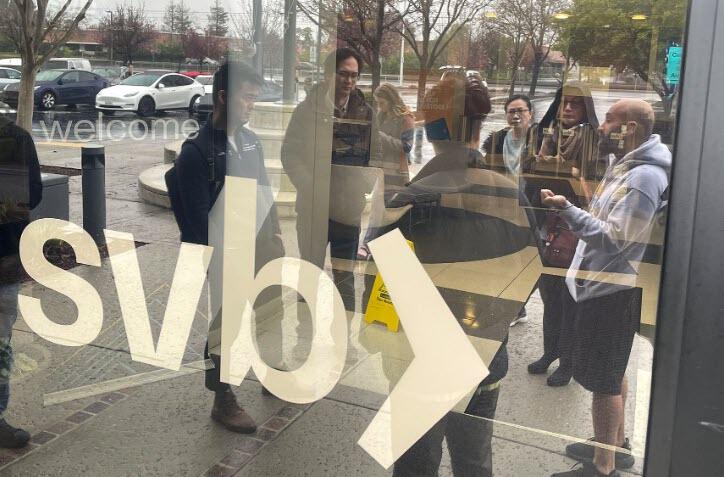
The failure of the Silicon Valley Bank (SVB), $212 billion in assets until only recently, is a huge mess and a possible foreshadowing. Its fixed-rate bond holdings declined rapidly in market valuation due to changed market conditions. Its portfolio crashed further due to a depositor run. And it all happened in less than a few days.

It’s all an extension of Fed policy to curb inflation, reversing a 13-year zero-rate policy. This of course pushed up rates in the middle and right side of the yield curve, devaluing existing bond holdings locked into older rate patterns. Investors noticed and then depositors too. The high-flying institution that specialized in providing liquidity in industries that have lost their luster suddenly found itself very vulnerable.

In addition, the bank was exposed with a portfolio of collateralized mortgage obligations and mortgage-backed securities. But with rates rising, those are coming under stress too as high leverage in housing and real estate become untenable amidst falling valuations. Borrowers are finding themselves under water and that in turn adds to stress on lenders.

Continue reading

The Empire of Lies Strikes Back… Extraordinary Cover-Up of Nord Stream Terrorism, by The Strategic Culture Editorial Board

The U.S. government launched a incredibly flimsy story from a select few house organs to divert attention from Seymour Hersh’s story. From The Strategic Culture Editorial Board at strategic-culture.org:

Western news outlets pompously claim to be pinnacles of journalism and defenders of public interest and democracy. They are nothing but the propaganda ministry for Washington – the Empire of Lies.

The New York Times and other Western news media ran with clumsy and blatantly diversionary claims this week, which in the end only serve to draw even more attention to the guilt of the United States in blowing up the Nord Stream gas pipelines.

Not only is the administration of U.S. President Joe Biden even more indictable over the criminal act; the absurd cover-up attempt this week exposes the Western media as nothing but a ministry of propaganda masquerading as journalism.

Four weeks ago, the eminent independent American journalist, Seymour Hersh, published a blockbuster investigative report that revealed how President Biden and senior White House staff ordered the explosive detonation of the natural gas pipelines connecting Russia to the European Union via the Baltic Sea and Germany. The legendary Hersh has an impeccable record of groundbreaking stories, from the My Lai massacre committed by U.S. troops in Vietnam in 1968 to the Abu Ghraib prison torture in Iraq under American occupation to the operation of ratlines to funnel weapons and mercenaries from Libya to Syria to fight Washington’s proxy war for regime change in Damascus.

Continue reading

What Will Happen When Banks Go Bust? Bank Runs, Bail-Ins and Systemic Risk, by Ellen Brown

When there’s not enough money to go around, how the pain is shared. From Ellen Brown at unz.com:

Financial podcasts have been featuring ominous headlines lately along the lines of “Your Bank Can Legally Seize Your Money” and “Banks Can STEAL Your Money?! Here’s How!” The reference is to “bail-ins:” the provision under the 2010 Dodd-Frank Act allowing Systemically Important Financial Institutions (SIFIs, basically the biggest banks) to bail in or expropriate their creditors’ money in the event of insolvency. The problem is that depositors are classed as “creditors.” So how big is the risk to your deposit account? Part I of this two part article will review the bail-in issue. Part II will look at the derivatives risk that could trigger the next global financial crisis.

From Bailouts to Bail-Ins

The Dodd-Frank Wall Street Reform and Consumer Protection Act of 2010 states in its preamble that it will “protect the American taxpayer by ending bailouts.” But it does this under Title II by imposing the losses of insolvent financial companies on their common and preferred stockholders, debtholders, and other unsecured creditors, through an “orderly resolution” plan known as a “bail-in.”

The point of an orderly resolution under the Act is not to make depositors and other creditors whole. It is to prevent a systemwide disorderly resolution of the sort that followed the Lehman Brothers bankruptcy in 2008. Under the old liquidation rules, an insolvent bank was actually “liquidated”—its assets were sold off to repay depositors and creditors.

Continue reading

The Forced Medication of All Citizens, by Karen Hunt

How long before we’re forced to take drugs and vaccines? From Karen Hunt at off-guardian.org:

…most men and women will grow up to love their servitude and will never dream of revolution.”
Aldous Huxley, Brave New World

It all started back in the 1950s with “these drugs will make you feel better, just try them.” And people did.

Over the years it morphed into “WE RECOMMEND these drugs if you don’t want to be sick, depressed or dead.” Almost everyone listened and accepted that drugs were the answer and there was no way to live without them.

Over the past three years it’s been “YOU MUST TAKE these drugs or else you endanger your own life and the lives of those around you.” By this point, people were so conditioned to take drugs that they thought nothing of submitting to an experimental mRNA gene therapy that the experts promised would keep them “safe”.

Within the next couple of years, it will be “YOU ARE REQUIRED to take these drugs by law and if you don’t, you will go to prison for endangering the planet.” Having been consistently brainwashed for all these years, most people will unquestioningly comply. Those who don’t, will be informed on by neighbors, coworkers, even their own family members, for the safety of the planet.

Continue reading

RIP Silicon Valley Bank: Shut Down by California Regulator, Taken Over by FDIC, Shareholders Bailed In, Insured Depositors to Get their Cash by Monday, by Wolf Richter

Two things to be aware of about banking. When you deposit your money, you become an unsecured creditor of the bank. And if the bank fails, if you’re over the FDIC limit ($250,000) you’ll split up what’s left with all the other unsecured creditors, and you’re all at the bottom of the pile. From Wolf Richter at wolfstreet.com:

The bank survived the Dotcom Bust. But this bust is far bigger because the Free-Money bubble was far bigger. FDIC may not have a loss on this deal.

Silicon Valley Bank, a California state-chartered bank that was uniquely exposed to the massive all-encompassing startup bubble during the Free Money era – a bubble that is now imploding spectacularly amid what is called a mass extinction event among startups – was shut down and taken over Friday morning by the California Department of Financial Protection and Innovation (DFPI). In its press release, the regulator cited “inadequate liquidity and insolvency.”

The DFPI appointed the Federal Deposit Insurance Corporation (FDIC) as receiver. The FDIC announced that it had created the “Deposit Insurance National Bank of Santa Clara (DINB)” and that the FDIC, as receiver, “immediately transferred to the DINB all insured deposits of Silicon Valley Bank” to protect insured depositors. Depositors will have access to their insured deposits on Monday, March 13.

Continue reading

Immunizing Ourselves, by Eric Peters

Gold is the best antidote to central bank digital currencies. From Eric Peters at ericpetersautos.com:

A reader mentioned the way chicken and egg prices have been manipulated – upward – by culling flocks, ostensibly on account of some avian virus, probably as dubious as the ‘Rona but just as useful. Now comes word that the flocks are to be “vaccinated,” just as we were all supposed to have been – with the grift going straight into the pockets of the drug cartels who, conveniently, have “vaccines” at the ready.

Meanwhile, we’re paying $7 for a dozen eggs – probably soon $12.

But there is a way to immunize ourselves against this – and not just with regard to eggs and chickens – although that’s as good a place as any to start, if you’re able.

We got our own chickens – and so have our own eggs. We are immune from the grift – and our birds don’t have whatever’s-in-those-drugs coursing through their bodies and so, inevitably, ours.

We have unvaccinated chickens – and eggs.

Just as important, we are not dependent on the rent-seekers’ supply of chicken and eggs. We pay what it actually costs us to raise our birds – and get their eggs – which is less than what the corporate-owned stores charge for theirs. Over which we have no meaningful control, precisely because they are corporations – and so own practically all the stores (most of the small, independent ones having been “locked-down” out of business during the “pandemic,” which strangely was held in abeyance at those big corporate stores, which were curiously allowed to remain open).

Continue reading

“Expect Mass Layoffs…” – The Real-World Impact Of SVB’s Failure

It’s never pretty when a big bank shuts its doors. From Tyler Durden at zerohedge.com:

For most people in America, the news that a ‘bank in Silicon Valley’ has failed will be forgotten quicker than a story about soaring shoplifting in their local supermarket.

It shouldn’t.

Reality is that the contagion of the shuttering of the 18th largest bank in the US are widespread.

SVB is in fact the second largest (by assets) bank failure in US history after WaMu.

First things first, there is a long line of depositors who are over the $250,000 FDIC insured limit (in fact only somewhere between 3 and 7% of total deposits are insured). The following list, while incomplete, is approximately sorted by size of exposure:

  • USDC – Crypto Stablecoin run by Circle – Silicon Valley Bank is one of six banking partners Circle uses for managing the ~25% portion of USDC reserves held in cash. While we await clarity on how the FDIC receivership of SVB will impact its depositors, Circle & USDC continue to operate normally.
  • ROKU – Roku had 26% of its cash, $487 million with Silicon Valley Bank
  • BLOCKFI – BlockFi has $227 million in “unprotected” funds in Silicon Valley Bank, according to a bankruptcy document, and may be in violation of U.S. bankruptcy law.
  • RBLX – Roblox said 5% of its $3b cash and securities balance is held at SVB.

Continue reading

The Weakening Electric Grid: Less Reliable, More Fragile, by Milton Exrati

Here’s a winning strategy. Increase the load on the electric grid with electric cars while plugging the infrastructure into intermittent wind and solar power and letting its infrastructure go to pot. From Milton Exrati at The Epoch Times via zerohedge.com:

As more and more irritated customers become certain that power shortages and blackouts have become more common, the electric grid’s problems receive more attention. They should. Shortages and blackouts have in fact become much more common than they once were. The electric power grid has become increasingly fragile and considerably less reliable. This is especially troubling because, at the same time, Washington and several states plan to burden it further with electric cars and an increase in the use of electric appliances.

In part, the power problem reflects the increased reliance on inherently intermittent wind and solar sources. But this straightforward fact of life is only part of the story behind the electric grid’s problems. Matters are much more complicated.

Evidence of failure is irrefutable and has sometimes appeared with great drama. A 2021 cold snap in Texas, for example, led to widespread blackouts and the death of 250 people. California has for years regularly imposed rolling brownouts and blackouts on utility customers. Just this past Christmas season, unusually cold weather across the country prompted utilities from Massachusetts and New York across the Midwest and into the south to beg their customers to turn down their thermostats and delay their use of appliances. Millions lost power for days in North Carolina and Tennessee. Downed power lines caused some of the problems, but in many cases electric utilities simply had to cut off power to some in order to a total crash of their systems. The incidence of prolonged blackouts for all reasons has doubled since 2013.

The green lobby, predictably, blames the problem on how climate change has created more severe weather. The fossil fuel industry and its allies in Congress, equally predictably, blame the problem on the unreliability of wind and solar. No doubt there is truth on both sides, though many of these points are debatable. One point, however, is not subject to cavil—that the wind does not always blow, and the sun does not always shine. Even in the face of this reality, these problems would seem to be something engineers could find solutions and investments could implement. But there is a complication, because most of the country uses regional transmission organizations (RTOs) to buy and sell power.

Continue reading

A Handy January 6 Fact Sheet, by Julie Kelly

The facts certainly don’t support the “insurrection” story. From Julie Kelly at amgreatness.com:

In another example of Washington’s inexorable slide into banana republic territory, Senate Majority Leader Charles Schumer (D-N.Y.) took to the floor of the U.S. Senate on Tuesday to call for the removal of an American journalist. 

“I don’t think I’ve ever seen an anchor treat the American people, and American democracy, with such disdain,” Schumer said during his seven-minute authoritarian tirade. “And he’s going to come back tonight with another segment. Fox News should tell him not to. Fox News, Rupert Murdoch—tell Mr. Carlson not to run a second segment of lies. You know it’s a lie.”

Schumer later reiterated his demand to a group of journalists who, rather than denounce one of the most powerful government officials in the country attempting to silence an influential member of the media, dutifully reported Schumer’s bleating without question.

Republican senators including Senate Minority Leader Mitch McConnell (R-Ky.) and Senator Mitt Romney (R-Utah) joined the fray, echoing Schumer’s faux concerns over “national security.”

Clearly, it’s panic time. The White House, Congress, and the Democratic Party propaganda arm that is the corporate media realize their carefully engineered narrative about January 6 is imploding in real time. Which is why they’re accusing Carlson of “whitewashing” and “rewriting” the events of January 6. Anything less than total fealty to regime-approved talking points about what happened before and after that day now is considered a “threat to democracy.”

But facts are facts. And no amount of pearl-clutching by the hags on “The View” or threats made by U.S. senators can alter the reality of January 6. Between video recordings, witness testimony, court filings, and news reporting, the undeniable truth about January 6 cannot be willfully wished away even by the most skilled spinmeisters.

Continue reading

Student Debt Forgiveness Won’t Cure Higher Ed’s Disease, by Bruce Abramson

Higher education is on an insane treadmill in which the product gets worse and worse while the cost, subsidized by the government, gets increasingly outrageous. From Bruce Abramson at realclearwire.co

On February 28th, the Supreme Court heard arguments on President Biden’s plan to extinguish an estimated $400 billion in student debt. Biden deserves credit for highlighting a debilitating federal program in desperate need of reform. His proposal, however, would make the problem far worse, not better. Any serious reform would force academic institutions to take some responsibility for the education they provide—and to show some responsibility to the many young Americans they induce to go deeply into debt. 

The problems run deep. American higher education has become a hollow bubble of an industry coasting on brand equity and past glory. 

Notwithstanding pockets of world-class excellence, the industry does little well. Universities are top-heavy and inefficient. Their complex products bundle education, research, and campus life for many students who need—and can afford—only the first of the three. On campus, classrooms teach neither critical thinking nor employable skills. The return on research dollars is pitiful. Antisemitism and segregation thrive at levels unseen elsewhere in American society. Internal procedures fail to provide due process or equal protection. 

American academia is a sham suffering from disastrously flawed structures and incentive systems.

Continue reading