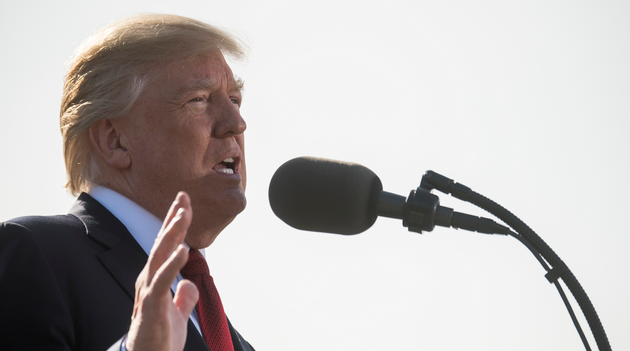
And somebody’s going to have some splainin to do . . . under oath. From James Howard Kunstler at kunstler.com:
“As the evidence mounts of an even broader censorship effort by the Biden administration, the Democrats’ attacks have become more unhinged and unscrupulous. After shredding any fealty to free speech, they now are attacking journalists, demanding their sources and claiming their reporting is a public threat.” — Jonathan Turley
And it will stop because, as the old wag Herb Stein laid down in his law years ago: Things that can’t go on, stop. Which raises the question: which things? And the answer is the things Western Civ is doing in its attempted suicide: inciting war, recklessly running up debt, persecuting its own citizens and stealing their liberties, subjecting them to medical malfeasance, destroying their goods production and food-growing capabilities, and subjecting the public to incessant mind-fuckery in a campaign to falsify and disfigure reality.
A consortium of public and corporate bureaucracies has institutionalized the falsification of reality under the pretense of saving the human race from a pack of hobgoblins led by climate change, racism, and normal sexual reproduction. They have been driven insane by the actual reality of pending economic collapse, which has only been accelerated by their own suicidal activities. What they apparently really want to save is their own positions, perquisites, and power. Their enabling mechanism is the digital computer and its many ways of assembling and controlling information, and thus controlling people, especially those who object to totalizing control. They do it because they can.
George Soros DAs, including the clown who’s going to arrest Trump, ought to spend their time going after real criminals and investigating real crimes. You know, like the kind the Biden family commits. From Kyle Becker at trendingpoliticsnews.com:
President Donald Trump reacted to the news of his imminent arrest in New York by pointing out that the Manhattan District Attorney’s office’s “leader is funded by George Soros.”
Manhattan D.A. Alvin Bragg, whom Donald Trump is referring to in his post, was elected in November 2021 with indirect backing from left-wing billionaire George Soros, who gave $1 million to the Color of Change PAC, which spent it to elect Bragg.
The Color of Change PAC is a radical activist group that describes itself as “the nation’s largest online racial justice organization.”
Fox News reported that Soros has “funneled $40 million dollars into district attorney campaigns nationwide,” including Bragg’s.
Former New York Police Commissioner Bill Bratton spoke out against the “$1 million donation that Hungarian-born philanthropist Soros gave to the Color of Change political action committee, which supported Bragg,” the New York Post reported.
“If you look at every city in America that has violent crime increases and disorder increases…what is the one common denominator?” Bratton said. “District attorneys, almost all of whom are funded phenomenally by George Soros.”
The New York Post reported that “Soros also donated $1 million to Alvin Bragg’s successful DA campaign in Manhattan, funneling the cash through the Color of Change political action committee.”
The Gothamist reported: “Color of Change PAC, a group that since 2016 has successfully backed reform-minded prosecutors across the country from Philadelphia to Michigan to Atlanta, announced they’d be pitching in $1 million dollars through their political action committee to put towards mailers, canvassing, and phone-banking on Bragg’s behalf.”
One quick indicator is to check and see how much your bank and its officials donated to Democrats. From Mark E. Jeftovic at bombthrower.com:
The Elites are bailing out their own banks, not yours
The systemic banking and financial crisis I’ve been warning about for years has arrived. (In fact, the report I put out in January seems to be playing out in spades).
The printing of 37 trillion dollars out of thin air over the pandemic widened the wealth inequality gap – and they followed that up with the most drastic and rapid interest rate hiking cycle in Fed history.
What did they think was going to happen?
Now the banks are failing – Silicon Valley Bank went from passing its KPMG audit with flying colours and getting their debt rated “A” by Moody’s mere weeks ago, to the executives frantically paying themselves bonuses and selling their shares in the hours and days before the bank failed and was taken over by the FDIC.
98% of the deposits in SVB were uninsured, meaning that those deposits wouldn’tshouldn’t have been covered by FDIC insurance. That means any accounts with balances above $250K were facing the loss of their funds.
But this is Silicon Valley Bank – this is where the elites place their bets on Silicon Valley unicorns. So we can’t have that.
In a hastily convened meeting between the FDIC, the Fed and the US Treasury, it was decided that all deposits would be covered, insured or not.
Crisis averted, right?
Wrong. It turns out that only SVB and Signature banks would be covered; if any other banks fail, like your bank, your community co-op in your hometown or state, or any other bank in flyover America far away from the Coastal elites – if they get into trouble (because people are moving their money into “protected” banks), then that’s not covered.
Trump says they’re untouchable. Most of the other Republican candidates and potentials say otherwise. From A.B. Stoddard at realclearwire.com:
In the prospective 2024 nominating contest, some GOP wannabes are serving up straight talk about the need to fix Medicare and Social Security, even though Donald Trump banished entitlement reform from Republican doctrine in 2016. These fiscally sober, and actually conservative, Republicans aren’t likely to win the nomination, and they’re making Trump giddy. But they could also put House Republicans and Ron DeSantis in a jam.
Nikki Haley, who announced her candidacy last month, and likely contenders Mike Pence and Mike Pompeo, have all said the looming insolvency of these programs – which take up 30% of the federal budget – must be addressed.
House Republicans vowing to find $130 billion in spending cuts had initially placed entitlements squarely on the negotiating table, but removed them after Trump and President Biden united against reform. Biden taunted congressional Republicans at his State of the Union, saying it was their “dream” to cut both popular programs, which was met with boos. Trump has released a video warning congressional Republicans not to cut “one penny” from either safety net program in their negotiations over the debt ceiling. After both events, House Speaker Kevin McCarthy made it explicit: In their hunt for savings they will look elsewhere and leave both programs alone.
“Clean” increases in the debt ceiling passed during Trump’s presidency, while the debt increased by 39%. House Freedom Caucus members, who rode the Tea Party wave and sought drastic spending cuts for years, went all in on the Trump spending bender. One of those Freedom Caucus members who went on to serve as both budget director and then chief of staff to Trump – Mick Mulvaney – told The Dispatch, “The truth of the matter is that the first two years of the Trump administration, when the Republicans had the House and the Senate, we raised spending faster than the last couple of years of the Obama administration.”
When the slaves revolt, they will seek the blood of their masters.
In 2013, a century after the establishment of the Federal Reserve, I published The Golden Pinnacle. The novel’s hero is Daniel Durand, a Wall Street banker. Chapter 27, “Fools’ Gold,” features Daniel’s testimony in 1913 before a House of Representatives subcommittee against legislation under consideration that would establish the Federal Reserve. Eleanor is Daniel’s wife and Tom and Alexander are two of his four sons. As the current banking crisis unfolds, I won’t have much to say that will add in any meaningful way to what I said in “Fools’ Gold”. Why repeat myself? Perhaps I’ll just keep linking back to this post. Please share in whole or in part with attribution and a link back to this post.
From “Fools’ Gold”
Daniel sat at a table in a committee hearing room of the House of Representatives. The drafts crisscrossing the room carried the winter cold of February. There were few spectators in the gallery. Daniel glanced at Eleanor, who sat with Tom and Alexander, but she was staring in a different direction. Although she had wished him well, she had seemed preoccupied when they met briefly in the hall outside the hearing room.
Members of the subcommittee of the House Committee on Banking and Currency strolled to their seats, signs denoting the representative, at an elevated, semicircular panel at the front of the room. They chatted with each other. Nine representatives sat down. The chair for Representative Bulkley of Ohio remained empty. The chairman of the subcommittee, Representative Carter Glass, from Virginia, banged his gavel.
“The hearing in consideration of House Bill 7837, for the establishment of a federal reserve bank and the furnishing of an elastic currency, shall now come to order. The subcommittee will hear the testimony of Mr. Daniel Durand, from the firm of Durand & Woodbury, of New York.” Chairman Glass’s accent had an unmistakable Virginia lilt that reminded Daniel of Aldus Kincaid, his attorney for the court of inquiry. A dapper gentleman in his mid-fifties, Glass had prominent ears and a nose that filled a larger proportion of his face than the average nose filled of the average face.
“Thank you, Mr. Chairman, and thank you, members of the committee,” Daniel said. “This legislation is still in its early stages and the details of the reserve system are the subjects of dispute. However, before everyone is enmeshed in them, it’s time to consider not just the purported benefits but also the real dangers of central banking and government-created money, or an elastic currency, if you will, and to ask if this supposed innovation is in the best interests of our country.” He glanced at his notes.
“A persistent misnomer is the term ‘bank deposit,’ which is not a deposit at all. If I take an item to a warehouse and pay a fee to deposit it for safekeeping, when I exercise my contractual rights and claim it, the owner of the warehouse must give it back to me. The owner can’t lend it out, use it to secure a loan, or give it to another depositor to satisfy his claim. On the other hand, when I put my money in a bank, the banker can lend or invest it, use those loans and investments as collateral to borrow money, or use my funds to pay creditors or other depositors. I haven’t deposited my money in the same sense that I deposited the item at the warehouse.
“My deposit is actually a loan and I’m an unsecured creditor of the bank. Much of the instability of the present system stems from a fiction. The respectable bank is housed in a neoclassical fortress and prominently displays a sturdy vault, to convince the depositor his money is safe. In fact, almost all his money leaves the bank in search of a return higher than the interest the bank pays him. Only a small portion is held in reserve to meet depositor withdrawals, although all depositors are told they can withdraw their money on demand.
“The bank has made a promise that it can’t always keep. Business and financial cycles are as immutable as human nature. When famine follows feast and fear replaces greed, the demand for money inevitably increases. The banker faces his worst nightmare—a run on the bank. Banks with sufficient reserves or borrowing power survive. Those without them go bankrupt.”
Daniel looked up at the representatives. Only a couple appeared interested.
Fifteen days that will live in infamy. From Julie Kelly at amgreatness.com:
As we approach the third anniversary of “15 Days to Slow the Spread” there remains no accountability and no assurances that it couldn’t happen again.
Three years ago this week, our vibrant, noisy country went silent.
Or, I should say, it was silenced. Businesses didn’t shutter due to a sudden economic crash—although one quickly followed—and highways weren’t empty due to a global fuel shortage. Schools didn’t close because of a nationwide teacher’s strike; parents and children didn’t hunker down in separate rooms of the same house over a nasty family fight.
No, it was a man-made disaster the likes of which can only be compared to war. On March 16, 2020, President Donald Trump and his Coronavirus Task Force announced the infamous “15 Days to Slow the Spread.” For the first time in modern history, the free world, or so it was considered at the time, resorted to medieval methods to stop the unstoppable transmission of a novel contagion. Had there been enough time to farm a massive supply of leeches, the nation’s top government officials probably would have recommended bloodletting, too.
“The new recommendations are simple to follow but will have a resounding impact on public health,” the official White House announcement read. “While the President leads a nationwide response, bringing together government resources and private-sector ingenuity, every American can help slow the virus’ spread and keep our most high-risk populations safe.”
It is a day, and a decision, that will live in infamy. Trump, of course, is not solely responsible; Drs. Anthony Fauci and Deborah Birx shrewdly won the affection and trust of the American people early on, so any move contrary to their counsel would have created an even bigger crisis in the White House. Prior to the official declaration, Republican governors warned shut downs were imminent. Congressional Republicans with a few exceptions—Rep. Tom Massie (R-Ky.) comes to mind—grasped the devastating impact on the most vulnerable, especially children, the poor, and the elderly. The national news media amplified the untested “mitigation” approach without a shred of skepticism.
An arrest wouldn’t hurt his election campaign. From Tyler Durden at zerohedge.com:
Update (1315ET): The Washington Post reports that Trump spokesman Steven Cheung said Saturday morning there had been no “notification” of an indictment and said Trump’s supporters should attend a rally he is holding next week in Texas for his 2024 reelection.
Susan Necheles, a lawyer for Trump, said his remark about the timing of his arrest was gleaned from media reports on Friday about local and federal law enforcement players expecting to convene early next week to discuss security and logistics related to Trump’s expected indictment.
“Since this is a political prosecution, the District Attorney’s office has engaged in a practice of leaking everything to the press, rather than communication with President Trump’s attorneys as would be done in a normal case,” Necheles said in a statement.
* * *
As the banking crisis and the Hunter Biden laptop scandal continues to unfold, the potential indictment of former President Trump on felony falsification charges could be the only headline that really matters next week.
Fox News anchor John Roberts informed viewers on Friday afternoon that the Manhattan District Attorney’s Office has requested a “meeting with law enforcement ahead of a potential Trump indictment.” He said, “to discuss logistics for some time next week, which would mean that they are anticipating an indictment next week.”
Gee, the $100-plus billion we sent to Ukraine might have been better spent in the good old USA. You know, America First. From Fred Reed at fredoneverthing.org:
Great. Just ever-lovin’pea-pickin’ great. In LA some sixty thousand people–who really knows?–sleep on the sidewalks, in tents, cardboard boxes, sleeping bags, or not much of anything. Others live in their cars. The same in San Fran, Seattle, St. Louis. There being no bathrooms, they defecate as the urge hits, and where. What choice do they have? Some are junkies, others crazy, many just with no jobs or jobs that don’t pay enough for a room.
Meanwhile Biden sends billions to Ukraine, lots of billions, our billions, while America crumbles within. A corrupt, senescent, second-rate lawyer mysteriously empowered to bankrupt his own country to benefit a corrupt, dirtball country of no importance to America.
How is this possible? Why do Americans tolerate it?
Because they have no choice. Americans have no influence over their government except in things that do not matter to that government.
Recently my stepdaughter Natalia, Mexican, went to Austin to visit friends. She returned and pronounced America a truly odd country. All the houses were the same, so how could you find your way home at night? And there were lots of people, she said, living under bridges and on the sidewalks. This she thought strange. She had never seen such a thing in Mexico. In twenty years, neither have I.
A never-ending crisis for never-ending expansion of governments’ tyrannical powers. From Jordan Schachtel at dossier.substack.com:
What resulted was a giant human experiment in Public Health tyranny.
Thursday marks the three year anniversary of the infamous “15 Days To Slow The Spread” campaign.
By March 16, yours truly was already pretty fed up with both the governmental and societal “response” to what was being baselessly categorized as the worst pandemic in 100 years, despite zero statistical data supporting such a serious claim.
The Moment That Shook the World: "15 Days to Slow the Spread" (March 16, 2020)
Fauci: "In states with evidence of community transmission, bars, restaurants, food courts, gyms, and other indoor and outdoor venues where groups of people congregate should be https://t.co/T9CGrYFNjv… pic.twitter.com/k5oaU36YAR
I was living in the Washington, D.C. Beltway at the time, and it was pretty much impossible to find a like-minded person within 50 miles who also wasn’t taking the bait. After I read about the news coming out of Wuhan in January, I spent much of the next couple weeks catching up to speed and reading about what a modern pandemic response was supposed to look like.
What surprised me most was that none of “the measures” were mentioned, and that these designated “experts” were nothing more than failed mathematicians, government doctors, and college professors who were more interested in policy via shoddy academic forecasting than observing reality.
Within days of continually hearing their yapping at White House pressers, It quickly became clear that the Deborah Birx’s and Anthony Fauci’s of the world were engaging in nothing more than a giant experiment. There was no an evidence-based approach to managing Covid whatsoever. These figures were leaning into the collective hysteria, and brandishing their credentials as Public Health Experts to demand top-down approaches to stamping out the WuFlu.
Imagine a politician saying no to a journalist’s interview request, and doing it with a one word answer. From Philip Wegmann at realclearwire.com:
On its face, there wasn’t anything unusual about the email that landed last week in the press office of Florida Gov. Ron DeSantis.
“Background interview request from the Washington Post,” read the subject line that summarized the industry-standard process whereby information is shared with reporters under pre-negotiated terms, usually anonymity. When sanctioned by a politician or their team, it is called “going on background” to shape and broaden a story with additional facts and contexts but without direct attribution. When not sanctioned, well, then that is just called leaking.
Either way, Jeremy Redfern wasn’t interested. The DeSantis spokesman wrote back one word: “No.”
A screenshot of the exchange went viral with the consensus in more conservative corners of Twitter being that a liberal rag, albeit the beltway paper of record, had just been owned. The score in their minds? DeSantis: 1, WaPo: 0.
The little episode does underscore a larger, still emerging theme of the expected DeSantis presidential campaign. It isn’t just that the team that didn’t leak in Florida wouldn’t leak in the White House. The implication is that DeSantis would not obsess over what is written about him in news outlets most of his constituents don’t read, because such an obsession is counterproductive to conservative goals. In this way, DeSantis may prove to be the anti-chaos candidate.