Tag Archives: Mexico

Time’s Running Out for World’s Most Indebted Oil Company, by Don Quijones

Venezuela is not the only country with “problems” in its oil company. Mexico’s appears to be going down the drain, too. From Don Quijones at wolfstreet.com:

US rating agencies pressure Pemex and the new Mexican government. But Pemex is too big to fail. 

The financial pains and strains continue to grow for the world’s most indebted oil company, Petroleos de Mexico (Pemex). Standard & Poor’s became the latest in a succession of rating agencies to downgrade the company. Pemex is state-owned. So S&P has two credit ratings for the company: One, as if it were a stand-alone company; and one for the company as part of the Mexican state.

S&P slashed its stand-alone rating of Pemex three notches to ‘B-‘ from ‘BB-‘ on growing worries that financial support pledged by the government might not be enough to prop up the company and might not be enough revive declining production. Anything below ‘BBB-‘ is non-investment grade, or “junk.” ‘B-‘ is six notches into junk (see our corporate credit rating scales by Moody’s, S&P, and Fitch).

S&P left unchanged its rating of Pemex-as-part-of-the-Mexican-state, at ‘BBB+’, the same as its rating of Mexican government debt, but lowered its outlook for both to negative from stable, and warned that Mexico faces a one-in-three chance of being downgraded in the coming year. This, in turn, triggered a cascade of outlook downgrades for many of Mexico’s biggest corporations and 72 financial institutions, including the country’s biggest banks and insurance companies.

Continue reading

Mining Sector in Mexico Next Target of “AMLO Effect,” Shares Plunge, by Don Quijones

Will Mexico walk down the same path as Venezuela? From Don Quijones at wolfstreet.com:

Mexico is #1 silver producer in the world, #2 gold producer in Latin America, and a major copper producer.

For a president who hasn’t taken office yet and whose government is still in waiting, Mexico’s Andres Manual Lopez Obrador (AMLO) has managed to ruffle a lot of very important feathers. First, he scrapped the country’s most lucrative infrastructure project, a partly built airport for the capital that was expected to generate billions of dollars for many of the country’s richest companies, banks and families. Then, two weeks ago, his National Regeneration Movement (MORENA) party proposed a bill that directly threatens one of the banks’ core businesses: fee gouging. Since then, billions of dollars have been wiped off the banks’ market value.

Now, the same party, which, together with its allies, holds majorities in both houses of Congress, has set its sights on the activities of the mining industry. On Tuesday Senator Angelica Garcia presented a bill that would make significant changes to Mexico’s mining laws, including a proposal that would allow the country’s Energy Secretary to declare certain parts of the country off-limits for mining companies due to their negative social or environmental impact.

Continue reading

Foreign Rule, by the Zman

We’re ruled by foreigners from our own country. From the Zman at theburningplatform.com:

The Department of Justice has recently announced that the new great devil for the Empire is the drug cartels, operating just over the border. Empires need an enemy and to his credit, Trump is unwilling to pick enemies from the other side of the globe. Instead, he prefers more practical enemies, ones that cause real Americans real trouble in the real country. The drug cartels are not a threat to “our democracy” or a threat to freedom around the world. They sell drugs and murder Americans right here in America.

That’s a welcome change, given that Trump has often flirted with neocon lunacy regarding Iran and Syria. The ruling class and their media organs will never admit it, but one main reason for Trump is that white people grew tied of fighting wars for a ruling class that despises them. The fact that the Trump administration seems to be serious about the problems south of the border suggests they either get that or simply know how to read polling. Mexican drugs and crime are a serious concern for normal white people.

Continue reading

Older NAFTA 2.0: Free Trade or Central Planning? by Ron Paul

So-called free trade agreements are almost always managed trade agreements. From Ron Paul at ronpaulinstitute.com:

Last week the United States, Mexico, and Canada agreed to replace the North American Free Trade Agreement (NAFTA) with a new United States-Mexico-Canada Agreement (USMCA). Sadly, instead of replacing NAFTA’s managed trade with true free trade, the new USMCA expands government’s control over trade.

For example, under the USMCA’s “rules of origin,” at least 75 percent of a car’s parts must be from the US, Canada, or Mexico in order to avoid tariffs. This is protectionism designed to raise prices of cars using materials from outside North America.

The USMCA also requires that 40 to 45 percent of an automobile’s content be made by workers earning at least 16 dollars per hour. Like all government-set wages, this requirement will increase prices and decrease employment.

Continue reading

“Canada Just Got Played”: How Mexico Stabbed Canada In The Back, by Tyler Durden

Has Trump divided and conquered (at least as far as trade goes) North America? From Tyler Durden at zerohedge.com:

In what was the biggest economic news of the day, Donald Trump concluded bilateral trade negotiations with Mexico, a deal which he called the US-Mexico Trade Agreement (profiled previously) and which will replace the trilateral NAFTA which has – for now at least – been scrapped until Canada also comes to the negotiating table and hammers out an agreement with the US (read: concedes), from a position of weakness and virtually no negotiating capital.

There were some odd twists in the announced deal, for example the agreement on the “sunset clause”, which as some pointed out is strange as it is a “trilateral matter” – i.e., one which would involve Canada – and it was unclear how it squares with the U.S.Mexico pledge that their talks were purely on bilateral issues.

Confirming that Trump was engaging in some good old “divide and conquer”, was the announcement from a White House official that, if Canada doesn’t agree to a renegotiated NAFTA, it will go ahead with a two-way deal with Mexico, although another official claimed that splitting up the negotiations is “standard practice and not about squeezing Canada.”

That may not have been exactly true because even though Mexico’s foreign minister Luis Videgaray said it’s necessary for Canada to be part of the deal, he then said that if a trilateral Nafta deal with Canada is impossible, a bilateral agreement between the U.S. and Mexico would also be acceptable.

At this point the alarm bells went off, and as Globe and Mail correspondent Adrian Morrow said, “it looks like the U.S. and Mexico went far beyond bilateral issues and agreed to a pile of trilateral stuff without Canada.” He also noted that while it was unclear whether any of the negotiated terms were okay with Canada, “it puts enormous pressure on Ottawa to agree or hold up the deal.”

To continue reading: “Canada Just Got Played”: How Mexico Stabbed Canada In The Back

Putin is Killing Millions of Americans! by Ann Coulter

The only thing that would make liberals consider illegal immigration a problem is if it could somehow be attributed to Vladimir Putin. From Ann Coulter at anncoulter.com:

I don’t know what Trump said during that two hours when he met privately with Russian President Vladimir Putin, but like so many in the media, I know what I hope he said: Mr. Putin, I need you to publicly admit your complicity in our illegal alien problem.

Only if Putin owns up to deploying a vast network of Russian assets to personally direct the movements of millions of illegal aliens across the Sonoran Desert, through dozens of checkpoints and into our country, in fulfillment of his master plan to attack America’s financial viability, national security and future prospects, will the media, the Democratic Party and corporate Republicans ever emerge from their stupor and admit that we have a huge problem on our southern border.

Illegal immigrants have killed multiple times more Americans than Russia has in its entire history — or could ever hope to kill, even with a well-placed nuclear bomb.

But nothing will be done, unless we can prove Putin is behind it.

Our media and government want you to fixate on Russia’s annexation of Crimea as the big problem facing our country, hoping you’ll forget about the gaping hole on our border.

I haven’t counted to see how many Americans died as a result of Putin’s reacquiring Crimea — yes, I have! ZERO. Meanwhile, Mexican drug couriers kill more Americans every week than the Communist Soviet Union did when it shot down Korean flight 007 for flying into its airspace, almost starting a nuclear war.

Obsessing over irrelevant, unsolvable problems in remote parts of the globe is how liberals prove they are intellectuals. North Korea, Syria, Russia — that’s what you’re supposed to care about. Not your own country. Only Walmart shoppers care about their own country.

It would be as if in 1939, as the Nazi threat was looming, British newspapers discussed nothing but the bushfires in Victoria, Australia. How many died? Do they need our help? What shall we do? Where does the prime minister stand?


Real Coke and Car Tariffs, by Eric Peters

What tariffs do to the companies and consumers upon whom they fall. From Eric Peters at theburningplatform.com:

Real Coke – the most American of sodas – comes nowadays from Mexico. I mean of course the stuff made with sugar and put into glass bottles, the way Coke was once made and sold here  – as opposed to the high fructose corn syrup sweetened sludge (in aluminum cans and plastic bottles) currently sold here.

Interestingly, this is the case because of tariffs.

On cane sugar, which costs artificially more here in the U.S. thanks to them – in order to punish the manufacture of “cheap” sugar outside the U.S.

It is why American-made soda – not just Coke – is generally sweetened with HFC instead of cane sugar.

Almost everything else, too.

The soda sweetener switcheroo happened back in the ’80s. You may be old enough to remember. Real Coke was replaced with New Coke, which was Coke with HFC instead of sugar. Then – after an uproar – came Classic Coke, which wasn’t Coke. Because it was made with HFC, too.

But it was cheaper to make and sell  than real Coke with sugar.

Does the tariff on sugar benefit American soda drinkers? Their waistlines – and much-upticked tendency toward obesity and diabetes – provides the answer.

Cheapness – especially when it is artificial – has its price.

Not surprisingly, many people wise to the costs of HFC are willing to pay a little extra to get Mexican Coke – real Coke –  made with cane sugar. Or the more expensive boutique sodas which are made here, with artificially expensive cane sugar.

But if it weren’t for the tariffs on sugar, they wouldn’t have to go to Mexico (so to speak) to get a real Coke. They would be able to buy American-made Coke – without HFC.

And it wouldn’t be artificially expensive.

No one blames the Mexicans for HFC-laden American-made sodas. The problem is not enough people blame the U.S. government for the fact that they are effectively forced to drink HFC-laden sodas – or pay extra for sodas without the HFC.

The sugar isn’t naturally expensive. But the tariffs are.

Now the Orange One wants to apply tariffs to vehicles, apparently on the same principle – and it will have the same effects.

To continue reading: Real Coke and Car Tariffs

Despite Wave of Cyber Attacks, Banks in Mexico Double Down on Biometric Tracking of Customers, by Don Quijones

Mexico wants to be a leader in the biometric identification of bank customers. Mexico is currently a hacker’s paradise. What could go wrong? From Don Quijones at wolfstreet.com:

For hackers, biometric data is the Holy Grail. 

In a move fraught with risk, Mexico, a country that has become a haven for the black market of stolen personal data of all kinds, is about to build a big biometric database to be used not just for the benefit of government institutions but also for the nation’s banks.

Last year a law was passed that gave Mexican banks until the end of August 2018 to collect biometric data (finger prints and iris scans) on all their customers. Foreign-owned subsidiaries of global banks like Citi and BBVA were thrilled with the initiative arguing that it would help them combat identity theft. It could also help lenders fulfill their “know your client” (KYC) anti-money laundering checks, at much lower cost.

The ultimate goal is to develop a unique identification system that will work alongside the government’s national ID scheme, which is apparently in the final stages of development. But Mexico’s banks — in particular the smaller ones — struggle to develop the infrastructure needed to comply with the new rules by the end of August.

So in the past week, the banks were granted a nine-month extension to harvest their customers’ biometric data — and not just their fingerprints and iris features. The lenders will now also be collecting their customers’ facial and voice characteristics, all of which will be stored on a super-secure, highly centralized platform that no hacker, no matter how skilled, resourceful or Russian, will be able to penetrate. At least that’s the plan.

But what happens if the database on which all this data is stored is itself not secure? Mexico has hardly proven itself to be a safe place for valuable data. Last year it won ninth place on PriceWaterhousecooper’s list of global “economic crime” hot spots. The country’s banks cannot even keep their own payment systems secure, let alone a centralized database full of priceless information on their customers.

To continue reading: Despite Wave of Cyber Attacks, Banks in Mexico Double Down on Biometric Tracking of Customers

Trade-War Drums: Is Mexico Ready to Fire at the US Corn Belt? by Don Quijones

If you levy penalties on another nation’s exports into your nation, they can levy penalties on your exports into their nation. For Mexico, the nuclear option would be penalties on US corn exports. From Don Quijones at wolfstreet.com:

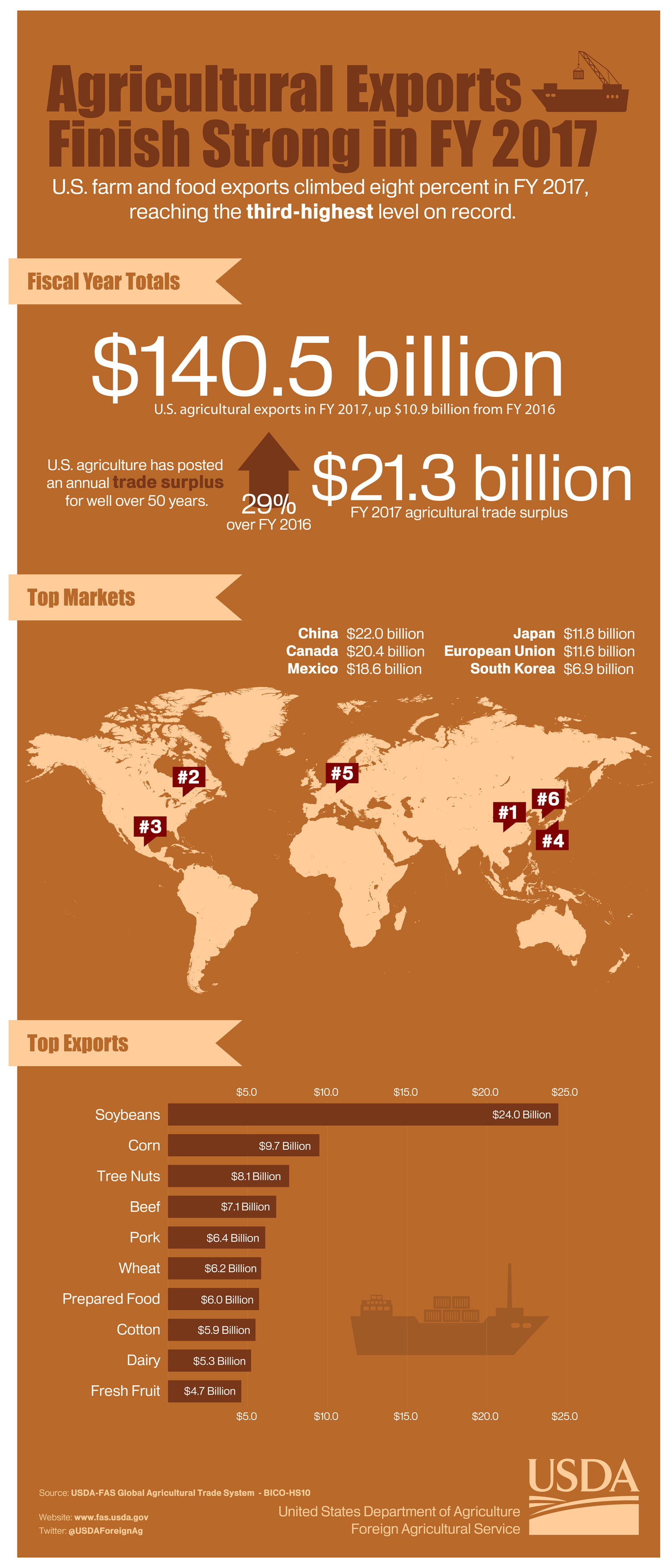
Various groups are clamoring for it in the third largest market for US food exports.

Mexico, the birthplace of maize, is dangerously hooked on U.S. imports of largely transgenic strains of the crop. In 2017 it was the third biggest importer of corn in the world, behind the EU and Japan, purchasing 15.2 million tonnes of the foodstuff, most of it from U.S. farmers and agribusinesses. But that could soon change.

Following the U.S. government’s decision to impose steep duties of imports on steel and aluminum from Mexico, Canada and the EU, Mexico, a net importer of US steel, has hit back with tariffs on US products including whisky, cheese, steel, bourbon, and pork. The move has upset U.S. businesses, including pork producers, who now face a 20% tariff on exporting leg and shoulder to Mexico. Mexico is the largest market for US pork exporters. It’s also the third largest market in the world for U.S. agricultural exports as a whole, pipped to the post by China and Canada.

For the moment the Mexican government has ruled outimposing duties on U.S. imports of staple foods such as corn, beans and soy, largely out of fear that it could further fuel food inflation, especially with the Mexican peso once again slumping against the dollar. But calls for such action are rising.

If Trump doubles down on his tariffs while continuing to insist on separate bilateral talks with Canada and Mexico, the Mexican government could end up taking the nuclear option of restricting U.S. imports of corn. Given that the biggest corn-producing states in the U.S. were also among the supporters of Trump in the last election, Mexico’s government has a clear strategic motive for doing so.

“If we want to stop this [trade war] and hit the U.S. government where it really hurts, we should target America’s corn belt by imposing a tariff on imports of U.S. transgenic corn,” said Angel Contreras Carrera, the president of the State Agricultural Union of Corn Producers.

To continue reading: Trade-War Drums: Is Mexico Ready to Fire at the US Corn Belt?

Strange Things Are Happening in Mexico’s Banking System, by Don Quijones

The Mexican banking system is plagued by major league hackers. From Don Quijones at wolfstreet.com:

Rumors and denials proliferate, as millions of pesos disappear.

On Sunday it was the turn of Mexico’s second biggest lender, Citibanamex, to be the target of customers’ ire after suffering a system failure that made it impossible for customers to withdraw money from ATMs, pay with their credit or debit cards, or access their online accounts. The incident is estimated to have affected roughly 4.3 million people. On Sunday night, the bank, which is majority owned by Citigroup, announced that the problems had been resolved.

But by Monday morning, a whole new problem had arisen. Customers of Mexico’s biggest bank, BBVA Bancomer, owned by Spanish banking group BBVA, had begun reporting problems accessing the bank’s mobile platform. As happened with TSB and Citibanamex, the problems became apparent first on social media. The bank responded to customer complaints on twitter and Facebook by urging them to restart their devices, switch to the 24 hour clock and reinstall the app. It’s not clear whether that is working.

These latest incidents have raised serious questions about the security of Mexico’s banking system — something we warned about at the beginning of April.

At the end of April a number of financial institutions reported suffering a cyber attack via Bank of Mexico’s SPEI interbank transfer system, an iteration of the SWIFT global payment system. Lorena Martínez, the director of Bank of Mexico’s payment systems, denied rumours that SPEI had been breached. “That has not happened,” she said, adding that the problem was detected in the internet application used by some institutions to connect to the central payment system.

While Bank of Mexico (or Banxico for short) admitted there had been a hack, it denied that any money had been taken. Now, weeks later, sources close to the government investigation claim that cyber thieves had in actual fact siphoned off hundreds of millions of pesos by creating hundreds of phantom orders that wired funds to fake accounts at different five banks, including Mexico’s third largest, Banorte. Accomplices then emptied the fake accounts in cash withdrawals from dozens of branch offices.

To continue reading: Strange Things Are Happening in Mexico’s Banking System